North Korea’s successful use last week of a long-range rocket to launch a satellite into orbit has catapulted the Asian rogue state back into the international spotlight for at least two reasons: First, the launch speaks volumes about the maturity of the North’s missile arsenal. Second, North Korea’s missile gains are likely to be shared with others, notably in the Middle East, including Iran. By Ilan Berman Read Full Story

Tag Archives: Missile Defense
North Korea EMP attack could destroy U.S. — now Obama must take immediate action
North Korea is a mortal nuclear threat to the United States, right now! Any nuclear weapon detonated above an altitude of 30 kilometers (18 miles) will generate an electromagnetic pulse (EMP) that will destroy electronics and could collapse the electric power grid and other critical infrastructures — communications, transportation, banking and finance, food and water — that sustain modern civilization and the lives of 300 million Americans. All could be destroyed by a single nuclear weapon making an EMP attack. By Peter Pry. Read Full Story
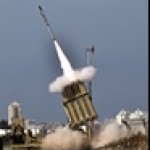
November 26, 2012 – Star Wars over Gaza!
Israel’s Iron Dome shot down 84-percent of several hundred Iranian supplied missiles launched by Hamas from Gaza at Israeli cities. Built in record time with U.S. help, Iron Dome again demonstrated—as did Patriot 20 years ago—the importance of ballistic missile defenses in the new world disorder. Read Full Story

An Open Letter to Citizens of the Coastal States around the Gulf of Mexico
If you live near the Gulf of Mexico, you are the front line to an eminent threat to all Americans. The electromagnetic pulse (EMP) from a nuclear weapon exploded a hundred miles above the U.S. could kill 60-90 percent of all Americans. The powers that be should urgently address this well known threat that could be launched by Iran or Terrorists from a ship in the Gulf. By Ambassador Cooper. Read Full Story
Meeting The Iranian Threat
As U.S. troops withdraw from Iraq and Afghanistan, Iran rapidly broadens its reach to undergird a global strategy to threaten Americans at home and abroad—and our overseas friends and allies. U.S. missile-defenses need to adapt to this increased threat and to broader Iranian influence in the Middle East. By Henry F. Cooper and Robert L. Pfaltzgraff. Read Full Story
Key Policy Briefs
We will be adding key policy briefs as we progress.