April 27, 2014 – Pivot Agenda Item: Defeat FOBS!

April 27, 2014 – Pivot Agenda Item: Defeat FOBS!

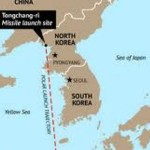
On his trip to the Pacific Rim, President Obama should set the stage for almost immediately ending America’s current vulnerability to the existential electromagnetic pulse (EMP) threat posed by North Korea’s Fractional Orbital Bombardment System (FOBS) capability. Beyond unilateral measures—the U.S. could deploy a TPY-2 radar in the Philippines to help defend them from North Korea and to empower our Aegis ships in the Pacific and our ground-based interceptors in California to shoot down a FOBS attack before it reaches U.S. Territory. Read Full Story

April 17, 2014—Defeat Iran’s FOBS!

April 17, 2014—Defeat Iran’s FOBS!

Iran, like North Korea, has demonstrated an ability to launch nuclear weapons into low earth orbit over the South Polar regions. Last year, they launched a monkey into space in such a trajectory, reportedly in a 4400 pound capsule that could easily carry a conventionally designed nuclear weapon into orbit. If they launched a much lighter “EMP” nuclear weapon possibly in the North Korean inventory, they could achieve substantially higher orbits. (Detonation of either weapon over the U.S. could lead to the death of several hundred million Americans within a year.) These facts, coupled with geographic realities, make defending against an Iranian FOBS more difficult than is the case for North Korea. And the Iranian Mullahs may be more inclined to attack “the Great Satan” than is North Korea’s Dear Leader. We can and should quickly end our vulnerability to both emerging if not existing threats. Read Full Story

April 11, 2014—Defeat North Korea’s FOBS!

April 11, 2014—Defeat North Korea’s FOBS!

A combined diplomatic and technical response is proposed to counter effectively North Korea’s demonstrated FOBS capability, which poses an existential EMP threat to the American people. We should insist on inspecting their satellite payloads for launches over the South Polar regions, and if they refuse be prepared to shoot down their satellites before they overfly U.S. territory. We should deploy a layered set of sea- and land-based defenses to do so, beginning almost immediately—and for relatively little expense since existing mostly already funded defense capabilities would be employed. Read Full Story

April 3, 2014—North Korea’s Looming EMP Threat.

April 3, 2014—North Korea’s Looming EMP Threat.

North Korea’s recent satellite launches and previous nuclear tests, coupled with its recent claims of a coming test of a “new form” nuclear weapon, give us pause in contemplating a possible North Korean EMP attack on the United States coming from over the South Polar region. The question is, will we take effective initiatives in time to counter this threat? Read Full Story

March 25, 2014—Put the Stars Back Into Star Wars!

March 25, 2014—Put the Stars Back Into Star Wars!

To deal more effectively with today’s threats, we should return to President Ronald Reagan’s vision made explicit in his March 23, 1983 speech that launched the Strategic Defense Initiative (SDI). The “powers that be” should revive technology programs aimed at developing space-based defenses, the most cost-effective way to defend against a full gamut of ballistic missile threats, including those that pose an existential electromagnetic pulse (EMP) threat. Read Full Story

March 18, 2014—Build Better Defenses, Now!

March 18, 2014—Build Better Defenses, Now!

The Russian Bear on the prowl in Ukraine presents sobering global implications of a growing threat that could escalate even to place American equities at risk at home. We need both effective diplomatic and military responses—including an increased emphasis and funding for effective ballistic missile defenses for our friends and allies near the Bear and for Americans at home. Read Full Story

March 12, 2014—Still a Dangerous World . . .

March 12, 2014—Still a Dangerous World . . .

“I think that cutting the defense budget in significant ways right now is a serious mistake. You know, when we’ve cut the budget before—at the end of the Cold War, at the end of Vietnam and at other times, it’s been because we thought the world was going to be a safer place . . . at least we thought so temporarily at the time. No one can make that case right now. You look at the situation in Ukraine and our relationships with Russia. You look at the tensions between China and Japan and in the South China Sea. You look at Iran and North Korea. These guys are operating on the 20th century model of nation states, boundaries matter, strategic interests matter, zero sum game, I win, you lose. This is the way these countries look at the world. It’s different than the way the West Europeans and we look at it, and frankly the pace at which both the Europeans and the United States [are] cutting their defenses, regardless of what the facts on the ground in terms of the number of ships and number of planes, it certainly sends a signal that we are not interested in protecting our global interests.” . . . Former Defense Secretary Bob Gates, March 9, 2015 Read Full Story


March 5, 2014—In the Blink of an Eye . . .

March 5, 2014—In the Blink of an Eye . . .

Everyone should be aware of the instabilities created by Russia’s interference in Ukraine—and it could rapidly go quite badly. Some have recalled the implausible events and misjudgments that led to World War I and wondered about a recurrence. Furthermore, if Iran or anyone else launches a nuclear weapon to high altitude over the U.S. and detonates it to create an electromagnetic pulse, also in the “blink of an eye” that could lead to the death of several hundred million Americans. Read Full Story

February 25, 2014—Proliferation Cacophony Crescendo?

February 25, 2014—Proliferation Cacophony Crescendo?

We understand the electric power grid vulnerabilities and how to fix them—if the powers that be would take the needed initiatives. Yet they dither while the growing nuclear proliferation threat presents a serious concern that we may experience a devastating attack before necessary countermeasures are enacted. Our failing diplomacy and lethargic defense programs are sapping our strength, leaving us with friends who don’t trust us and enemies who don’t fear us. Time is running out for us to rectify this situation. And our enemies know it. Read Full Story